Search your device to sell…


If you want to know how to check old phone resale value before selling your smartphone, start by identifying its exact model, storage capacity, age, physical condition, and battery health.
Several factors affect how much a buyer may be willing to pay for a used smartphone. Understanding them helps you estimate your old mobile's resale price more realistically.
The exact smartphone model often matters more than the brand name alone. Some models remain in demand because of their performance, camera quality, design, or software support, while others may lose buyer interest as newer alternatives become available.
Your original purchase price provides useful context, but it does not determine the phone's current value. The resale price depends on what comparable devices are worth today.
Smartphones generally lose value as they age. New model launches, changing technology, reduced software support, and lower demand can all affect their resale price.
However, depreciation is not the same for every phone. A popular model in good condition may retain demand better than a less sought-after model of a similar age.
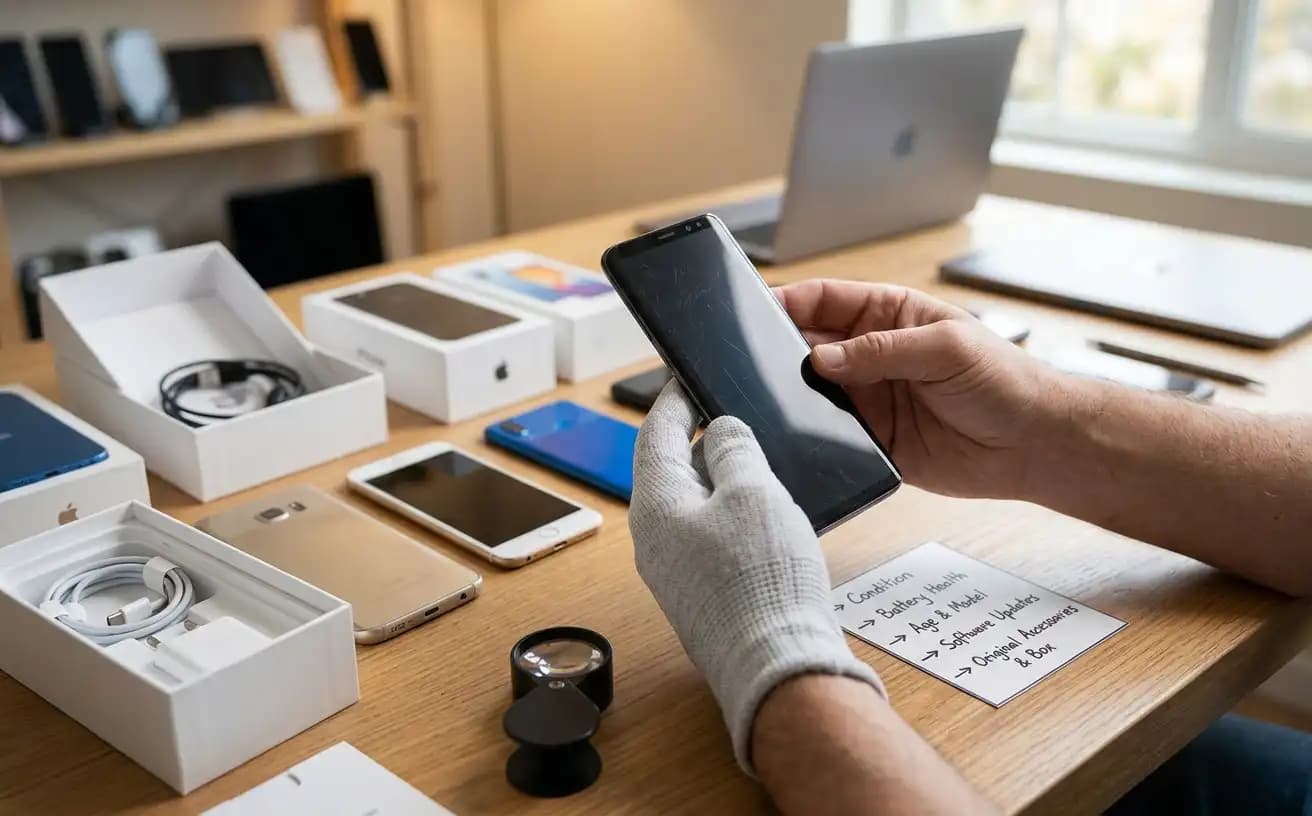
Physical condition is one of the important factors affecting phone resale value.
Check for:
Scratches and dents on the body.
Cracked screens or display issues.
Faulty buttons, speakers, or cameras.
Charging-port problems.
Water damage or other functional faults.
A phone that works properly and shows minimal wear may attract stronger offers than a similar device with significant damage. The actual price difference depends on the model and the buyer's assessment.
Battery condition can influence a smartphone's resale price because buyers want a device that remains practical for everyday use.
For iPhones, the Battery Health section in Settings can provide information about maximum capacity and peak performance. On Android phones, available battery-health information varies by manufacturer and model.
Look for unusually fast battery drain, overheating, charging problems, or unexpected shutdowns. A battery replacement may be relevant to valuation, but its effect depends on the device, replacement quality, and buyer requirements.
Storage capacity can influence the price of otherwise similar phones. For example, two variants of the same model may have different resale values because one offers more storage.
RAM, processor performance, camera features, connectivity, and other specifications can also affect demand. Compare the exact variant rather than relying on the model name alone.
A phone with a replaced screen, changed battery, or previous motherboard repair may receive a different offer from a device with no known repair history.
Keep available repair records and disclose known faults honestly. Original components and documented repairs can help buyers understand the device's condition, although they do not guarantee a higher price.
A smartphone that continues to receive security updates may appeal to buyers who intend to use it for longer. Demand can also change with newer releases, competing models, and local buying preferences.
These smartphone resale value factors work together. No single feature guarantees a particular selling price.
Follow these steps to estimate your phone's value before selling it.
1. Identify your exact phone model. Open your phone settings to check the model name and storage capacity. Make sure you distinguish between variants of the same smartphone.
2. Check the phone's age. Look at your purchase invoice or available records. The phone's age helps you compare it with similar devices in the resale market.
3. Inspect the physical condition. Test the display, cameras, speakers, buttons, charging port, and connectivity. Record any damage or functional issues.
4. Check battery health. Review battery-health information if your phone provides it. If not, observe battery drain, charging behaviour, and unexpected shutdowns.
5. Record repairs and faults. Note any replaced parts, screen repairs, battery changes, or known problems. These details help you make a more realistic estimate.
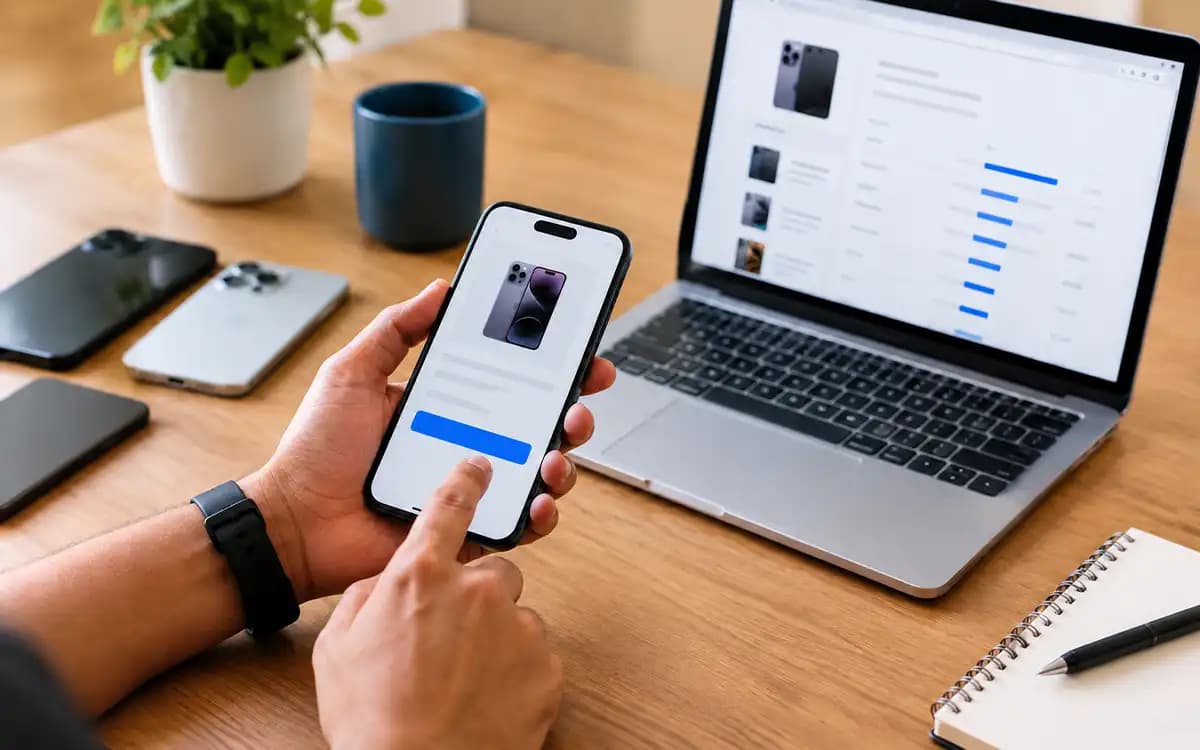
6. Compare similar phones. Research listings for the same model, storage variant, and condition. Remember that an advertised price is not necessarily the price a seller ultimately receives.
7. Compare selling offers. Request quotations from more than one credible platform where possible. Check whether the offers use similar assumptions about your phone's condition.
8. Review the final offer. Understand whether the amount is an estimate or a confirmed offer. Ask about any condition-related deductions, fees, or applicable terms before accepting.
There is no single formula that accurately calculates every smartphone's resale price. However, you can use comparable phones as a starting point and adjust your estimate based on your device's condition and market demand.
A simple conceptual approach is:
Estimated resale value = comparable market value adjusted for age, condition, battery performance, repairs, specifications, and demand.
For example, suppose similar phones are advertised for ₹10,000–₹12,000. This is a hypothetical example, not a current market quotation. You would need to compare their storage, condition, battery performance, and selling terms before deciding whether your phone belongs within that range.
Do not assume that the lowest or highest listing automatically represents your phone's value. Use multiple comparable listings and actual selling quotations where available to establish a more realistic estimate.
These categories are general guidance, not a fixed pricing scale. A damaged premium smartphone may still attract interest, while an older phone in excellent condition may have limited demand.
The key is to evaluate the phone honestly and compare it with similar devices rather than assuming that appearance alone determines its price.
When comparing online mobile valuation results, check more than the headline price.
Model and storage: Confirm that each offer applies to the exact same variant.
Condition: Check whether the estimate assumes an undamaged screen or a fully working battery.
Price adjustments: Understand whether the initial quote can change after an assessment.
Fees: Check for any applicable deductions or charges.
Payment terms: Understand how and when payment is made under the provider's stated terms.
Transparency: Choose an option that explains its process and conditions clearly.
The highest advertised price is not necessarily the best final offer. A clear quotation with understandable terms is easier to evaluate than an attractive estimate with unclear conditions.
You cannot control every factor affecting your phone's value, but a few practical steps can help you present it accurately.
Clean the phone carefully and remove dust from its exterior.
Gather the original invoice, box, and available accessories.
Check that essential features work properly.
Back up important photos, contacts, and files.
Sign out of accounts and follow the manufacturer's instructions to erase personal data before handing over the device.
Disclose known faults and previous repairs.
Compare multiple offers before deciding to sell.
Consider repair costs carefully before paying to fix an older phone.
For iPhones, Apple's official support documentation explains how to check battery health and understand battery performance.
Apple Support (UK)+1
For Android phones, consult the relevant manufacturer's instructions for your specific device before resetting it.
Avoid these mistakes when checking your phone's resale price:
Comparing different storage variants or smartphone models.
Assuming the original purchase price determines current value.
Ignoring battery problems, screen damage, or repair history.
Treating advertised prices as confirmed transaction prices.
Relying on a single valuation.
Assuming an online estimate guarantees the final selling amount.
A more reliable estimate comes from comparing like-for-like devices, assessing your phone honestly, and reviewing actual offers.
Conclusion
Checking your old phone's resale value starts with understanding its model, age, condition, battery performance, and current market demand. Compare similar devices and review more than one offer before making a decision. If you are planning to sell your smartphone, explore the relevant selling options available through Go Old and review the applicable terms before proceeding.
Identify your phone's exact model and storage capacity, assess its condition, and compare similar listings on reputable platforms. Request quotations where available and check their conditions. Remember that an online estimate may change depending on the device's actual condition and the buyer's valuation process.
The main factors include the phone's model, age, storage capacity, physical condition, battery performance, repair history, software support, and market demand. Their relative importance varies by device. Comparing smartphones with similar specifications and condition is generally more useful than relying only on the original purchase price.
Yes, battery performance can influence resale value because it affects everyday usability. A phone with rapid battery drain or charging issues may receive a lower offer. The effect depends on the model, the severity of the problem, and the buyer's assessment rather than a universal battery-health percentage.
Possibly, but acceptance depends on the buyer's policies, the phone model, and the severity of the damage. Disclose the problem when requesting a quote and confirm whether the buyer accepts damaged devices. Do not assume that every selling platform accepts faulty phones.
Start by identifying the exact model, storage variant, and approximate age. Assess its condition and compare similar devices and available quotations. Other records may help establish its details, but documentation requirements vary by buyer. Confirm the required documents before agreeing to sell.
Loading comments…
Get your best price instantly with free doorstep pickup and secure payment.